
Alpaca Consulting
Keeping alpacas raises many questions – especially for people who are dealing with these animals for the first time. But even experienced keepers are repeatedly faced with new challenges, for example in feeding, pasture design or the selection of suitable breeding animals.
Over the years, we have repeatedly been asked for advice on various topics relating to alpacas. These include, among other things, questions about husbandry, care, feeding or basic aspects of breeding.
Well-founded advice can help to avoid typical beginner mistakes and to create the conditions for long-term successful and species-appropriate husbandry.
In addition to practical questions on husbandry, feeding and care, you will also find information on the legal requirements for alpaca keeping in Switzerland – in particular regarding training, the certificate of competence (SKN) and TVD registration.

Knowledge about alpacas
Anyone who wants to engage more intensively with alpacas or keep animals themselves should become familiar with various aspects of alpaca husbandry. Husbandry, care, health and breeding are closely interconnected and influence each other.
The following topics provide an overview of important areas relating to alpacas and their husbandry:
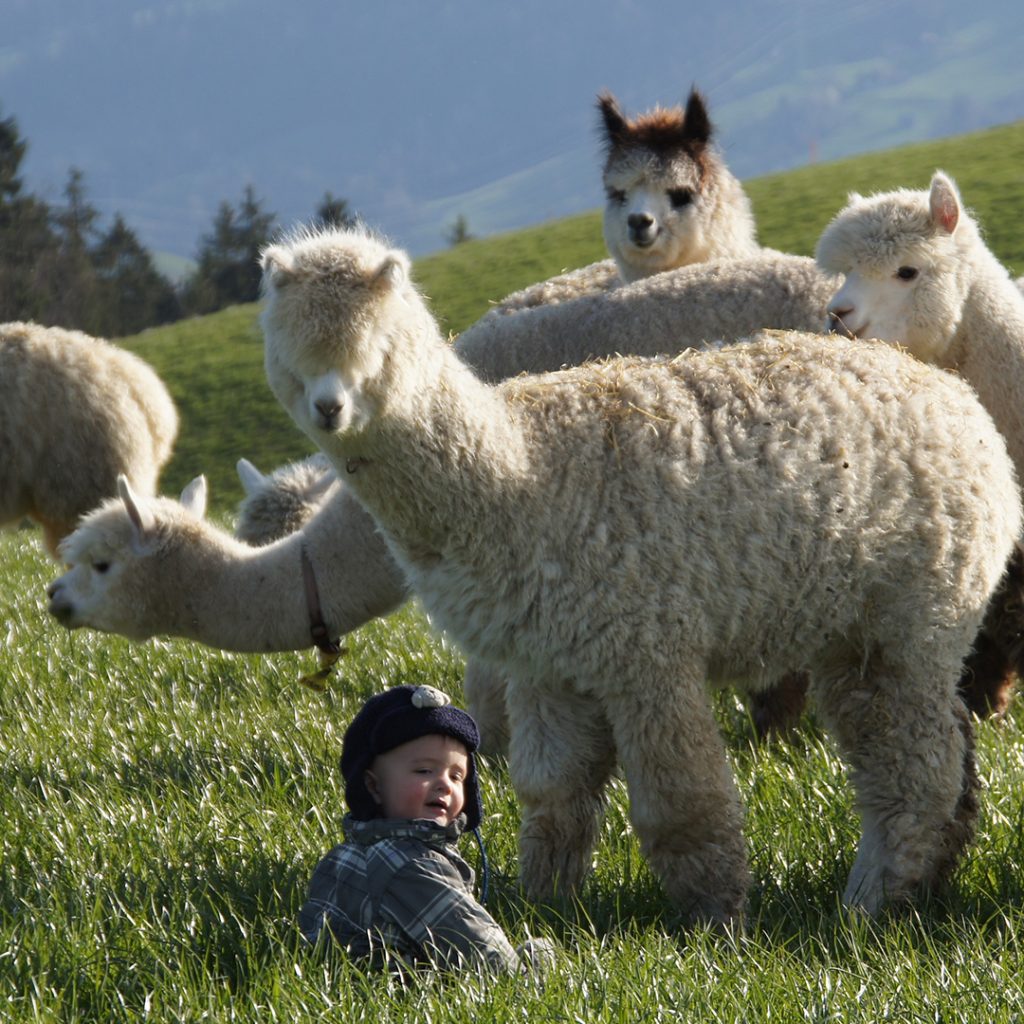
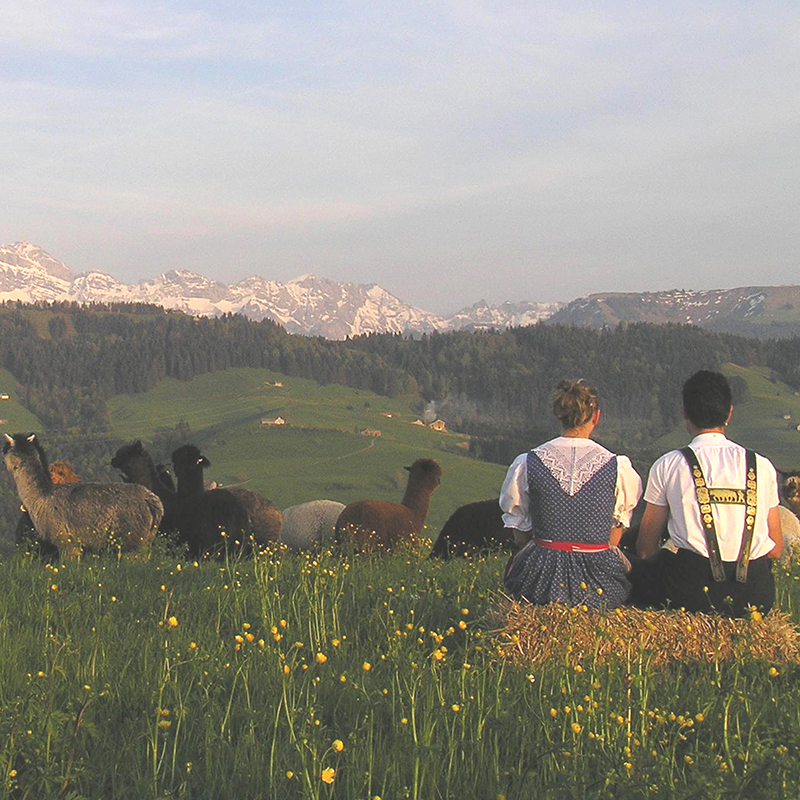

Why alpacas are special livestock
Alpacas belong to the family of New World camelids and originally come from the high Andes of South America. There, they have been kept and bred by humans for many centuries – mainly because of their high-quality fibre.
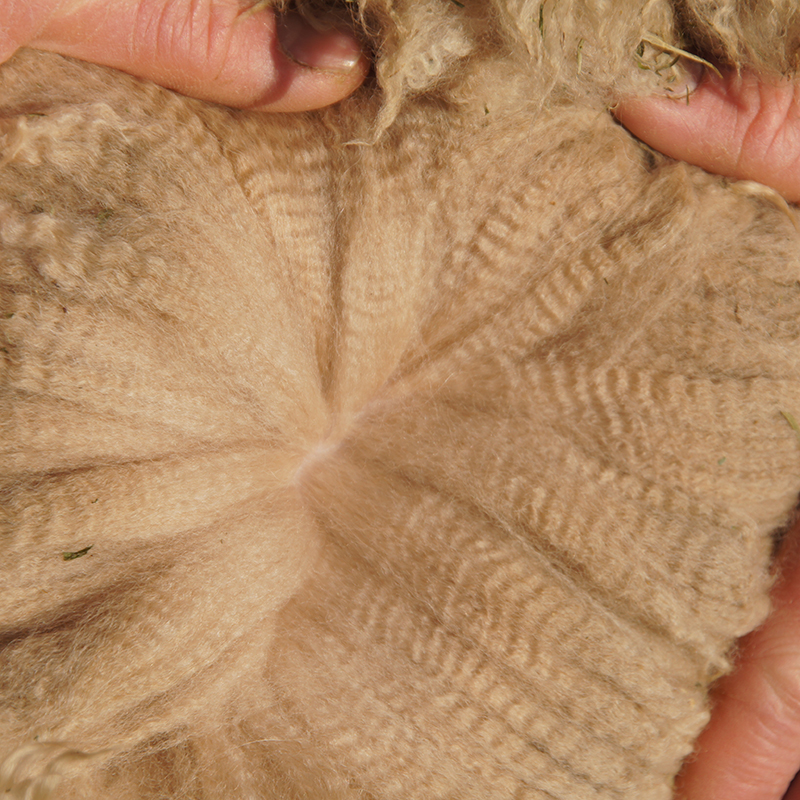
The fine and lightweight alpaca wool is considered one of the finest natural fibres in the world. It is particularly soft, temperature-regulating and is also well tolerated by many people who are sensitive to sheep’s wool.
Due to these properties, alpaca fibre is used worldwide for high-quality clothing and textiles.
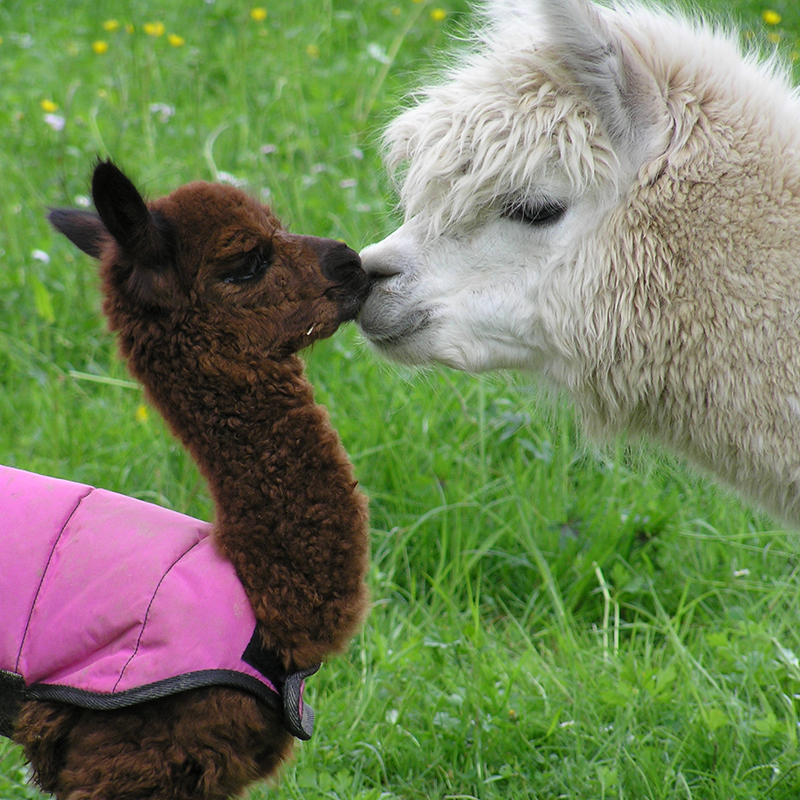
In addition to their valuable fibre, alpacas are also characterised by their calm nature and their pronounced social behaviour. They live in groups and communicate with each other through body language and soft humming sounds.
Alpacas are also considered comparatively undemanding and adaptable animals. With appropriate husbandry, they can adapt well to different climatic conditions and are now kept in many countries outside their original homeland.
Through their special combination of high-quality natural fibre, interesting behaviour and calm character, alpacas have also gained increasing importance in Europe.

Responsibility in alpaca husbandry
Keeping alpacas involves responsibility. As with all livestock, species-appropriate husbandry is crucial for the well-being of the animals.
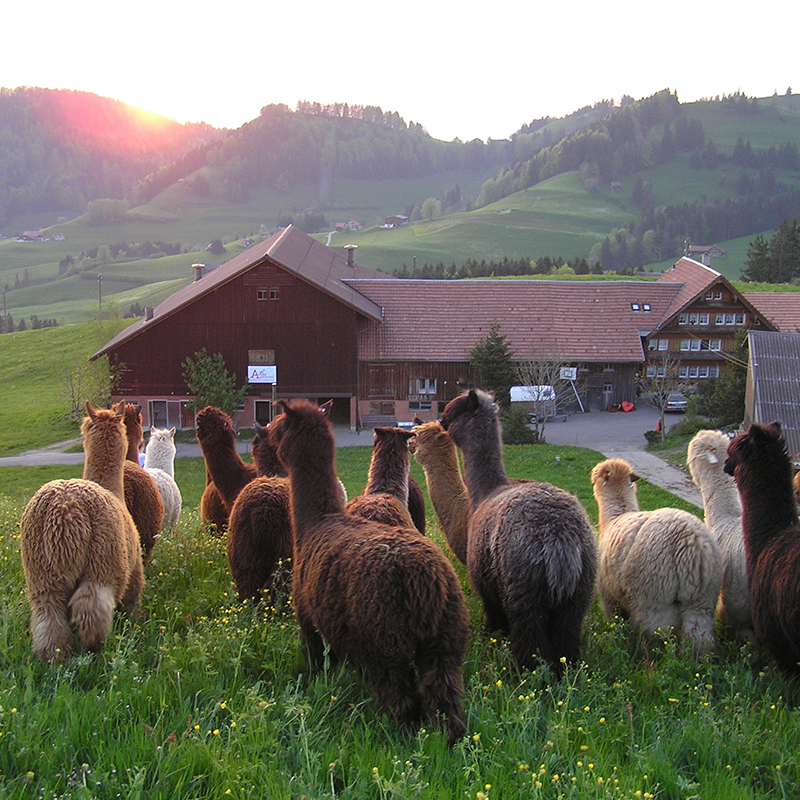
This includes sufficiently large pasture areas, a dry and protected shelter as well as keeping them in groups, as alpacas are pronounced herd animals. Individual housing is not suitable for these animals.
In addition to suitable husbandry conditions, regular care also plays an important role. This includes, among other things, annual shearing, the inspection and care of the claws as well as balanced and appropriate feeding.
Equally important is careful observation of the animals in everyday life. Changes in behaviour or in general condition can be early indications of health problems and should be recognised at an early stage.
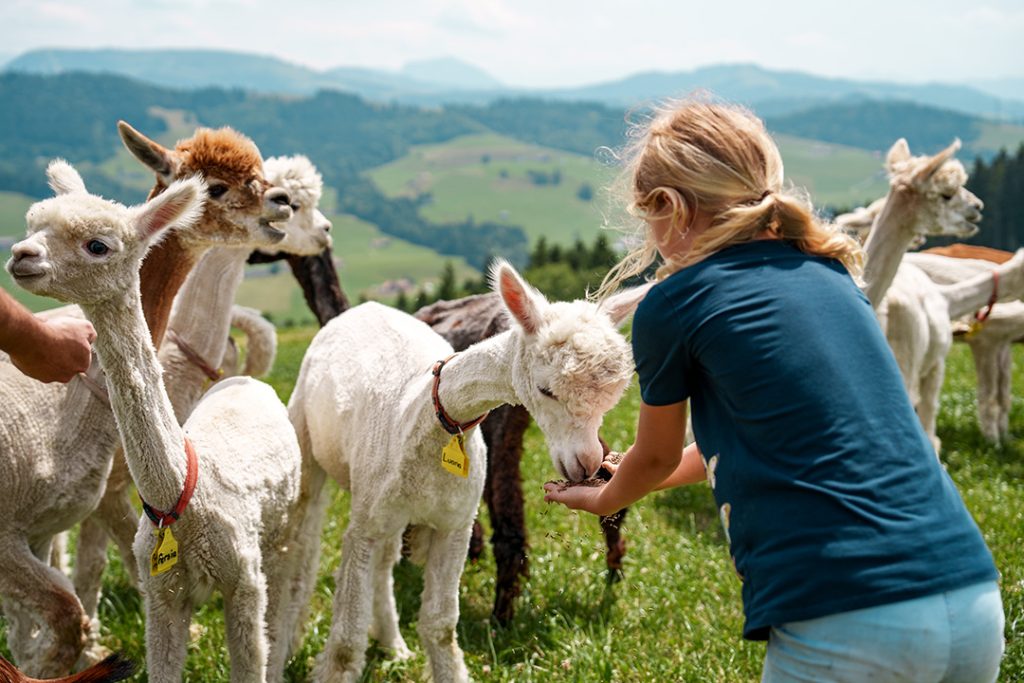
Preventive health aspects, such as parasite control or a balanced mineral supply, are also part of the basic responsibilities of a responsible alpaca keeper.
Anyone interested in keeping alpacas should therefore familiarise themselves early with the requirements of these animals and obtain sufficient information. Good preparation is an important foundation for long-term successful and species-appropriate alpaca husbandry.
Our experience with alpacas
On our farm, we have been intensively involved in the keeping and breeding of alpacas for many years. During this time, we have gained extensive experience in the daily handling of the animals – from species-appropriate husbandry to care and preventive health measures, as well as questions of breeding and fibre quality.
Working with alpacas requires patience, attentiveness and a good understanding of their behaviour. Many aspects of husbandry cannot be derived from theoretical knowledge alone, but develop through practical experience in everyday life with the animals.
Over the years, we have learned how important careful animal observation and a well-coordinated combination of husbandry, care and breeding are. Each herd develops its own dynamics, and each animal has individual characteristics.
These experiences shape our daily work with the animals and help us to better understand their needs and to ensure the most species-appropriate husbandry possible.
Further information
The individual consulting pages provide in-depth information on the most important topics relating to alpacas – from basic facts and husbandry and care to health issues and breeding goals.
Further information on alpaca breeding and the development of New World camelids in Switzerland is provided by the association Neu Welt Kameliden Schweiz (NWKS)