
Alpaca Care
Alpaca Care
The Alpaca Care is often underestimated, as alpacas are considered hardy and low-maintenance animals. In reality, regular and attentive care is the foundation for healthy animals and a stable herd.
In practice, it is not individual measures that matter, but the combination of daily observation, targeted care, and preventive measures. On this page, you will find the key fundamentals of alpaca care in Switzerland —clearly structured, easy to understand, and based on practical experience.

Key areas of alpaca care
Good alpaca care does not result from individual measures, but from the combination of observation, feeding, care, and prevention.
Daily checks
Daily observation is the most important foundation of alpaca care. Changes in behavior or condition are often the first signs of problems.
Feeding
Alpacas generally do not require intensive supplementary feeding. The key factors are high-quality grass, hay, water, and suitable minerals such as Camelibra.
Nails and teeth
Toenails and incisors grow continuously and must be checked regularly and corrected if necessary.
Shearing
Regular shearing is a central part of care and contributes significantly to the animals’ well-being.
Birth & rearing
Around birth and during the first weeks of life, attentive care is especially important to support both the mother and the cria.
Health & prevention
Many problems can be avoided through regular checks and early detection. Good care is always preventive care.
Daily checks
Daily checks are the most important foundation of Alpaca Care. They make it possible to detect changes in behavior or health at an early stage.
Alpacas often show signs of discomfort only very late. This makes it even more important to observe them regularly and pay attention to small changes. These include feeding behavior, body posture, movement, and behavior within the herd.
In practice, many problems can be detected early if the animals are seen daily and a good sense of their normal behavior is developed.
Calm and regular checks create confidence—for both the animals and the owner.
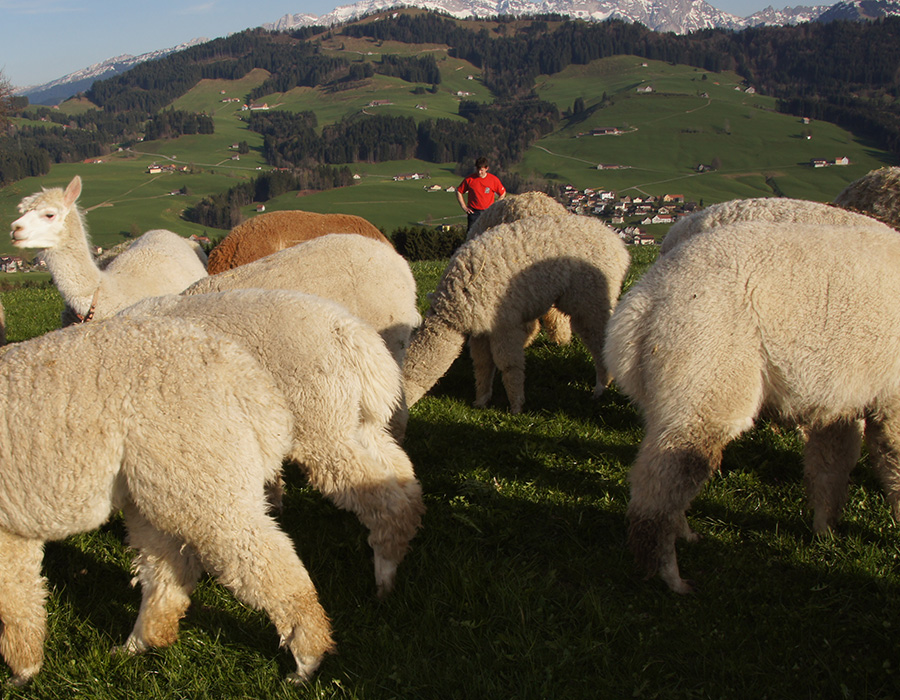
Feeding – the foundation of healthy alpaca care
Feeding is a central part of Alpaca Care, but it is often considered simpler than it actually is.
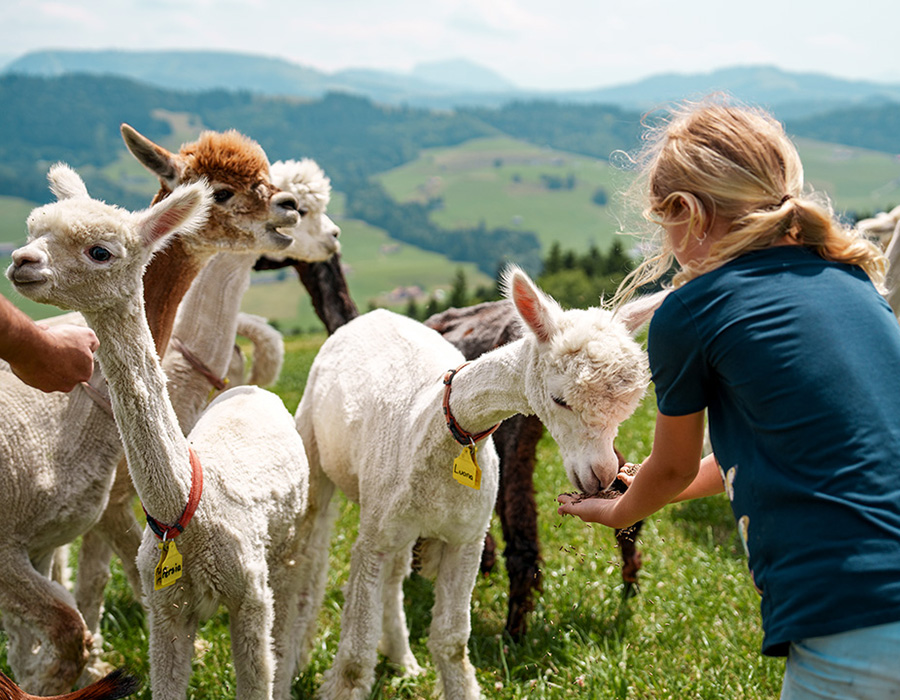
Alpacas generally do not require intensive supplementary feeding. A good supply of grass, hay, and fresh water forms the basis for healthy digestion and overall well-being.
Additional concentrate feed is usually only necessary in specific situations, such as during winter or for breeding females with higher nutritional needs.
Specially developed minerals for New World camelids, such as Camelibra, have also proven effective. They support mineral balance and contribute to the long-term health of the animals.
What matters is not the quantity, but a balanced and appropriate supply.
Toenails and teeth – regular checks and care
Toenails and incisors are areas that should be checked regularly as part of Alpaca Care .
Toenails grow continuously and should be checked approximately every three months and trimmed if necessary. On suitable ground, they may wear down naturally to some extent, but regular checks are still important to prevent misalignment.
Incisors also grow throughout life. Alpacas have incisors only in the lower jaw, while the upper jaw has a dental pad. In most cases, the teeth wear down naturally, but sometimes they may grow beyond the dental pad.
In such cases, the teeth need to be trimmed to ensure normal feed intake. Care must be taken not to trim them too much.
Regular checks of these areas help to detect problems early and maintain the long-term health of the animals.
Shearing and fiber – from animal to valuable natural fiber
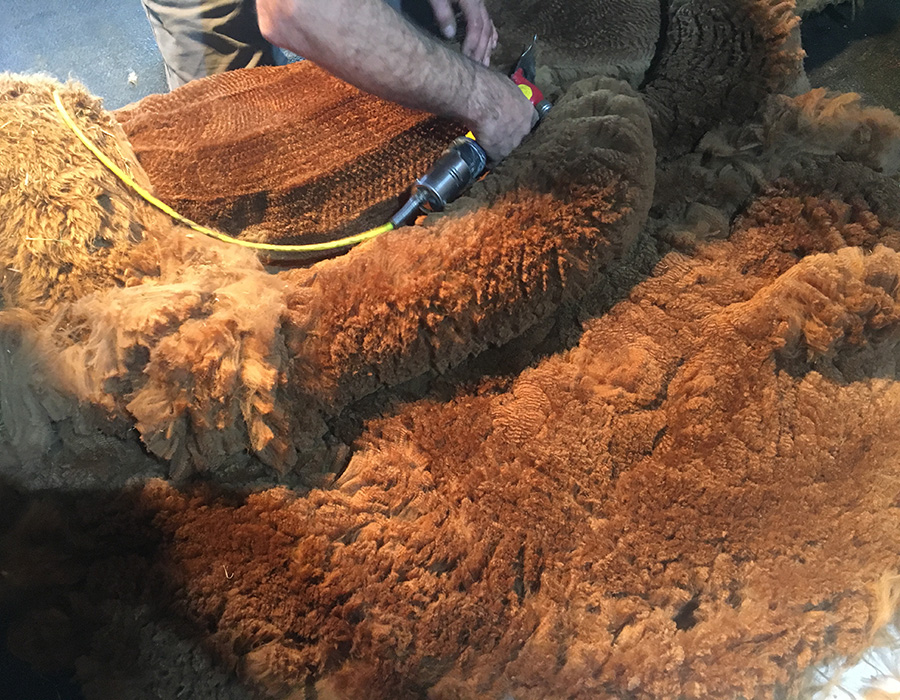
Shearing is a central part of Alpaca Care and also the moment when the valuable alpaca fiber is harvested. Alpacas are usually shorn once a year. This is necessary for the animals’ well-being and ensures they remain healthy and do not overheat.
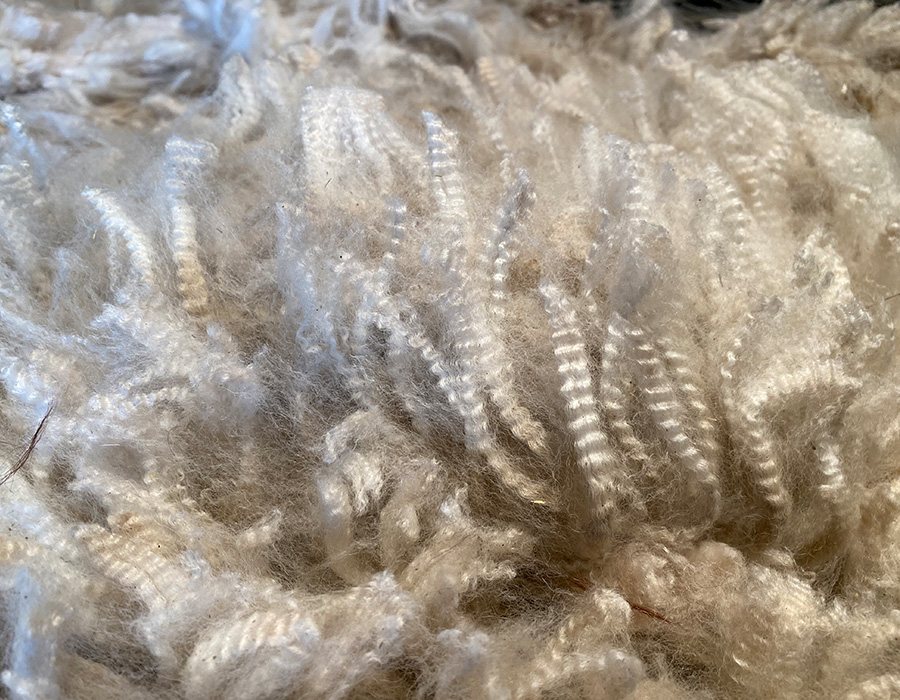
The harvested fiber is one of the highest-quality natural fibers and forms the basis for many premium products. Its quality depends not only on the animals themselves, but also on how the fiber is handled, sorted, and processed after shearing.
The origin of the fiber remains traceable—from the animal, through careful sorting, to the finished product. This results in a genuine Swiss natural product with transparent origin and high quality.
Part of the fiber produced on our farm is processed in Switzerland and forms the basis for our high-quality Alpaca duvets from the Best Alpaca Bedding™ collection.
Learn more about sustainable processing and how our bedding products are made in the section Sustainability of our alpaca duvets.
In practice, calm and professional shearing is essential—both for animal welfare and for fiber quality. More about the importance of annual shearing can be found in our article “The importance of annual alpaca shearing.”
For many alpaca owners, the question is not only what happens to the wool, but also who can shear the animals properly.
Professional shearing requires experience, calm handling, and safe control of the animals. In practice, skilled shearers are often difficult to find, and the quality of the shearing has a significant impact on both animal welfare and fiber quality.
For this reason, we offer our own professional Alpaca Shearing Service —with an experienced team to ensure calm, efficient, and proper shearing.
More information about the properties of alpaca fiber can be found in our article on Alpaca Wool.
Birth and rearing – special attention during a sensitive phase
For breeding females, the period around birth requires increased attention. During this time, it is important to observe the animals regularly in order to respond quickly to any complications. In most cases, alpaca births are calm and without problems. They often take place from the morning to early afternoon hours.
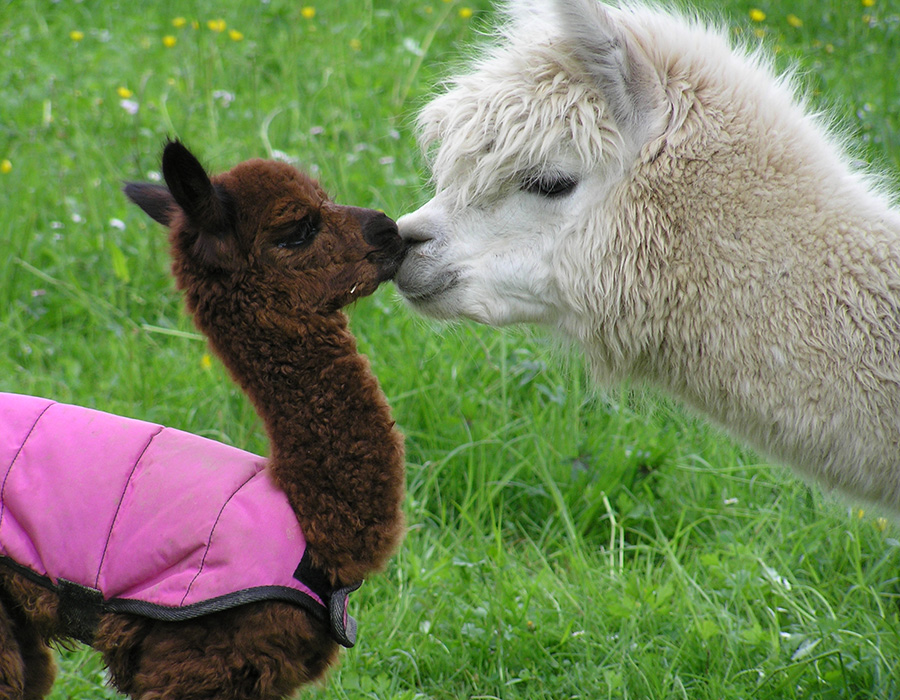
After birth, the cria should stand up within a short time and begin to drink from its mother. The first milk (colostrum) is essential, as it provides important antibodies and supports a healthy start in life.
It is also important to ensure that the cria passes meconium (its first feces) and that the placenta is expelled by the female in a timely manner.
During the first weeks of life, a calm environment and a stable herd structure play an important role in the development of the cria. From our experience, low-stress handling and attentive observation form the foundation for healthy rearing.
Berserk Male Syndrome – why the way of handling young males is crucial
When raising young males, there is one topic that requires special attention: the so-called Berserk Male Syndrome.
This behavior develops due to imprinting issues, usually caused by overly intensive or inappropriate human contact during the first months of life. As a result, the animals lose their natural distance and may later perceive humans as part of their social hierarchy.
It is important to note: calm and conscious handling of the animals is absolutely possible and appropriate.
Young males can be accustomed to humans, led, or trained to walk on a halter. Activities such as walking with them are also possible when the animals are raised and handled correctly.
However, it is crucial that young animals—especially males—are not treated like pets. Frequent petting, carrying, or overly close physical contact can lead to undesirable imprinting.
Respectful handling, clear boundaries, and proper development within the herd are the foundation for calm and safe animals.
From our experience, no problems arise with proper rearing—the key is finding the right balance in handling from the beginning. If this balance is not maintained, behavior may change in adulthood, making a conscious approach from the start all the more important. Further professional background on Berserk Male Syndrome can be found under Berserk Male Syndrome.