
Primary Health Care
Alpaca Health
Fundamentals for healthy alpacas and a stable herd
Alpacas are considered hardy animals, but alpaca health is still a sensitive topic that requires attention and experience.
Many health issues develop gradually and remain unnoticed for a long time. Alpacas often hide weaknesses, which makes changes in behavior especially important.
Good alpaca health does not result from individual measures, but from the interaction of housing, feeding, care, and regular observation.
On this page, you will find the key fundamentals of alpaca health—explained in a practical way and based on our daily experience.
Further basics can also be found in our Alpaca Facts.

Key fundamentals of alpaca health
Stable alpaca health does not result from individual measures, but from the interaction of observation, feeding, care, and a good understanding of the animals.
Daily observation
Many problems first appear in behavior, feed intake, or small changes within the herd. Calm observation is the foundation of good alpaca health.
Feeding & minerals
A balanced diet is essential for healthy alpacas. Minerals in particular play an important role in skin, fleece, condition, and overall well-being.
Parasites & skin health
Parasites are one of the most important health factors in alpaca keeping. This includes internal parasites as well as skin issues caused by mites or other factors.
Body condition & teeth
Changes in weight, chewing behavior, or overall posture are often noticed late. Regular checks help detect problems early.
Daily observation – the foundation of alpaca health
Daily observation is one of the most important factors for maintaining stable alpaca health.
Many health issues develop gradually and are not immediately obvious. Alpacas are not typical flight animals, but they often hide weaknesses for as long as possible.
For this reason, small changes are often the first signs of a problem.
Calm and consistent observation is therefore essential to detect health changes early and respond accordingly.
What should you look for?
Changes often first appear in behavior and small deviations from the usual herd pattern
Typical areas to observe include:
- Feeding behavior
Is the animal eating normally, more slowly, or withdrawing during feeding? - Behavior within the herd
Does an animal stay alone more often, or is there a change in group dynamics? - Body posture and movement
Does the animal appear relaxed and balanced, or tense and withdrawn? - Activity and alertness
Does the animal respond to its surroundings as usual?

Take small changes seriously
Often it is not a single symptom that matters, but changes in the overall condition of an animal.
An alpaca that suddenly becomes quieter, eats less, or behaves differently should always be observed more closely—even if no clear signs of illness are visible at first.
These early signs are often crucial for detecting health issues in time.
Good observation does not replace treatment, but it is the foundation of all preventive health care. Those who know their animals well can recognize changes more quickly and respond appropriately.
Digestion & feeding – a key foundation of alpaca health
Feeding plays a crucial role in alpaca health and is often underestimated.
Alpacas are ruminants with a digestive system specialized for fiber-rich feed. They are sensitive to unsuitable feeding or sudden changes.
Many health issues are related to feeding, digestion, or nutrient supply and often first appear through changes in behavior or body condition.
Basic feed – the foundation
The basis of feeding is suitable, fiber-rich, and clean roughage that is adapted to the needs of alpacas. It is not only the quantity that matters, but above all the structure, cleanliness, and composition. During the grazing season, pasture quality and management also play an important role.
Feed transition – managing changes correctly
Unsuitable feed or abrupt changes in feeding can negatively affect digestion.
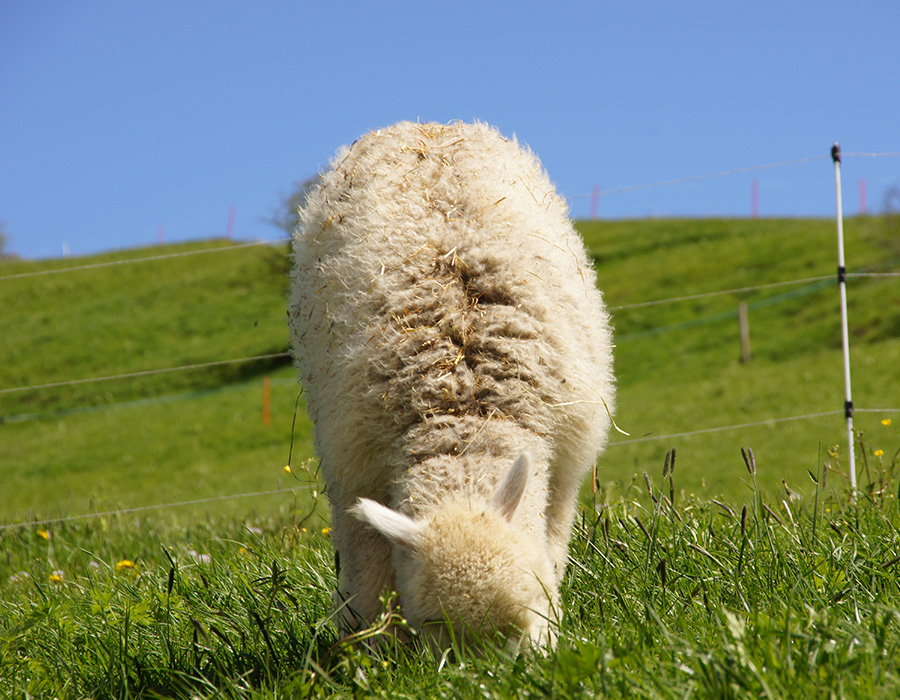
The transition from winter feeding with hay to fresh, nutrient-rich pasture grass in spring requires special attention.
Like other ruminants, alpacas are sensitive to sudden changes in feeding. A transition that is too rapid can lead to digestive problems, including colic.
It is recommended to introduce animals gradually to pasture—starting with only a few hours per day and providing additional hay in the barn. Grazing time can then be increased slowly.
Careful observation of the animals is especially important during this transition period.
Minerals – often underestimated
In addition to basic feed, minerals play an important role in alpaca health.
Trace elements such as zinc are particularly important for skin, fleece, immune system, and overall condition.
Especially during winter feeding with hay or when pasture quality varies, mineral supply may not always be sufficient.
Differences in soil, plant composition, and feeding practices mean that alpacas under European conditions are not always optimally supplied with all necessary trace elements. This can have long-term effects on skin, fleece, and overall condition.
Targeted mineral supplementation in practice
From our experience, an adapted mineral supply is an important part of maintaining stable alpaca health. Especially during winter feeding or periods of increased demand—such as pregnancy or lactation—targeted supplementation can be beneficial.
Our Alpaca mineral feed Camelibra is used specifically for this purpose and supports a balanced supply for the animals.
→ Learn more about Alpaca mineral feed Camelibra
Parasites – a key factor in alpaca health
Parasites are one of the most important factors affecting alpaca health and should be carefully considered in every herd.
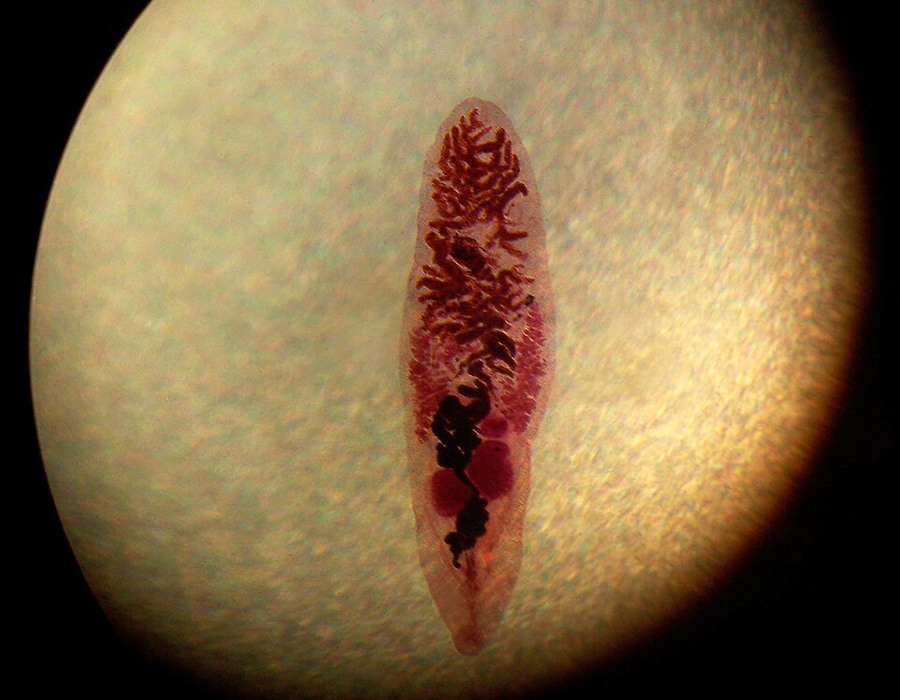
A distinction is made between internal parasites (endoparasites) and external parasites (ectoparasites). Particularly relevant are gastrointestinal parasites, coccidia, and liver flukes.
Infestations often develop unnoticed, as alpacas tend to hide weaknesses for a long time. Early signs may include changes in behavior, body condition, or feed intake.
Common parasites in alpacas in Switzerland
The most common parasites include:
- Gastrointestinal worms
- Coccidia (especially in young animals)
- Liver flukes
- External parasites such as mites
The small liver fluke in particular is a challenge in many regions. An infestation is often difficult to fully control and requires long-term management.
The goal is usually not complete elimination, but control of infection pressure within the herd.
Parasite management instead of routine treatment
In practice, blanket or routine deworming without prior testing is not recommended and can lead to resistance over time.
Instead, targeted parasite management has proven effective, where measures are adapted to the actual level of infestation.
These include:
- Regular fecal testing
- Careful observation of the animals
- Adapted pasture management
- Reduction of infection pressure within the herd
Parasites often have a gradual impact and can negatively affect condition, immune system, and overall herd stability over time.
Mites – a common issue in practice
Mites are among the most common external parasites in alpacas and play an important role in skin health.
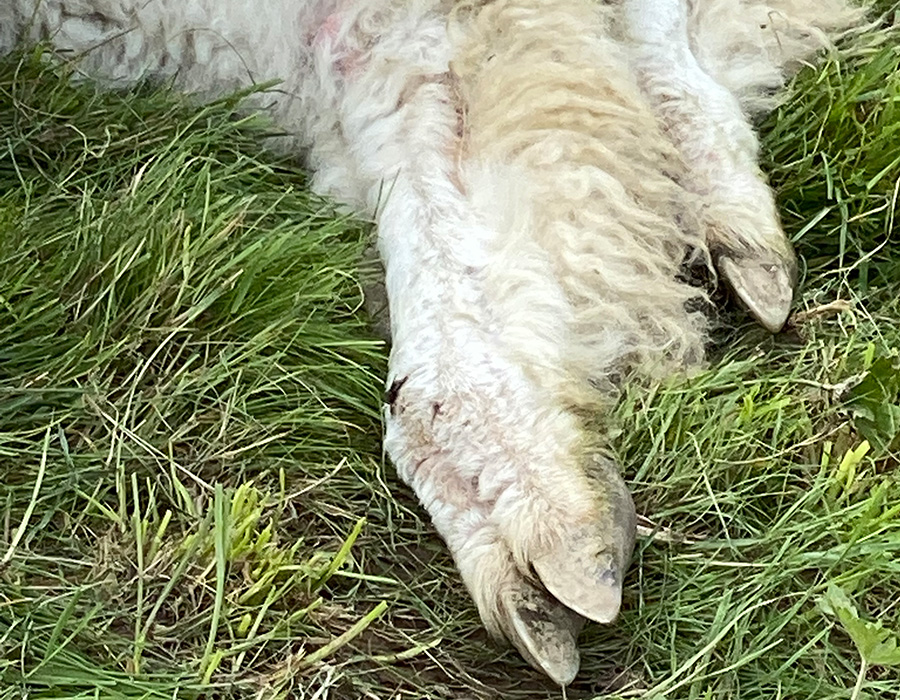
An infestation often first appears through changes in behavior. Animals may scratch more frequently, appear restless, or rub against fences and objects.
As it progresses, hair loss, scaling, or thickened skin may occur. Legs, the belly area, and less wool-covered regions are often affected.
Causes and spread
Mites can generally be transmitted through direct contact between animals. In practice, however, it is often observed that some animals are more affected, while others in the herd show little or no symptoms.
Factors such as moisture, skin condition, stress, or a weakened immune system can increase the risk of infestation.
Because symptoms often develop gradually, regular checks are essential to detect changes early.
Initial measures and next steps
From our experience, simple measures can often be taken at early stages.
Applying paraffin oil to affected areas can help suffocate mites by blocking their respiratory openings. At the same time, it protects the skin and reduces drying. This can support early-stage treatment and help soothe the skin.
If symptoms do not improve or continue to spread despite treatment, the situation should be assessed more closely. In such cases, it is important to identify the cause clearly and adjust further measures accordingly.
Calm observation combined with a targeted approach is key to managing skin issues effectively in the long term.
Body condition & teeth – detecting changes early
Body condition and chewing behavior provide important indicators of alpaca health and should be checked regularly.
Changes often develop gradually and can easily be overlooked in daily routine. For this reason, it is important to assess the animals as a whole rather than focusing only on individual signs.
A healthy animal appears calm, eats steadily, and shows stable behavior within the herd.
How can changes be recognized?
Typical signs may include:
- Weight changes
The animal appears thinner or loses body condition. - Changes in feeding behavior
The animal eats more slowly, more selectively, or withdraws during feeding. - Chewing problems
Feed falls from the mouth or is not properly chewed. - Behavioral changes
The animal appears quieter, less active, or behaves differently within the herd.

Importance of teeth and body condition
Dental problems can directly affect feed intake and digestion and often remain unnoticed for a long time.
Body condition is also an important indicator of the animals’ overall nutrition and health. Changes often appear first as small deviations before becoming clearly visible.
Regular checks and a good understanding of the animals help to detect changes at an early stage.
When should a veterinarian be consulted?
Despite good housing, feeding, and regular observation, situations may arise where professional assessment is necessary.
It is less about individual symptoms and more about changes in the overall condition of an animal.

If an alpaca remains abnormal over a longer period or its condition worsens, the situation should be taken seriously and assessed accordingly.
Typical situations requiring veterinary assessment
A veterinarian should be consulted especially when:
- An animal eats significantly less or stops eating
- The general condition visibly deteriorates
- Weight loss occurs
- Persistent digestive problems are present
- Skin conditions do not improve despite treatment
- Behavior within the herd changes noticeably
Importance of an experienced veterinarian
Alpacas belong to the New World camelids and differ in many ways from common livestock such as cattle or sheep. Therefore, it is important to consult a veterinarian experienced with alpacas or New World camelids.
In more complex or unclear cases, it may be useful to involve a specialized institution. The University of Zurich Veterinary Hospital has extensive experience with New World camelids and is often consulted in more challenging cases. → https://www.tierspital.uzh.ch/en/
Frequently asked questions about alpaca health
The following answers provide a brief overview of common questions about alpaca health, feeding, parasites, and the early detection of problems.
The first signs usually appear in behavior. An animal may eat less, appear quieter, withdraw from the herd, or change its posture. Since alpacas tend to hide weaknesses for a long time, small changes are often crucial.
Daily observation is essential. It is not about detailed examination, but about noticing behavior, feeding patterns, and the overall condition of the animals within the herd.
Many health issues are related to feeding and digestion. A stable, fiber-rich diet and an appropriate mineral supply form the foundation for healthy animals.
The change from hay to fresh pasture grass is a transition for the digestive system. If it happens too quickly, it can lead to digestive problems or colic. Therefore, the transition should be done gradually.
Under European conditions, supply through pasture and hay is not always sufficient. In practice, trace elements such as zinc play an important role for skin, fleece, and overall condition.
Parasites are one of the most important health factors. Gastrointestinal parasites and liver flukes in particular play a major role in Switzerland. Targeted management is essential, rather than routine deworming.
Typical signs include increased scratching, restless behavior, hair loss, or skin changes. Legs, the belly, and less wool-covered areas are often affected.
If an animal remains abnormal over a longer period, eats less, or its condition worsens, the situation should be assessed. What matters is not a single symptom, but the overall condition.
Alpacas are New World camelids and differ in many ways from other livestock. Therefore, a veterinarian with experience in alpacas is especially important.