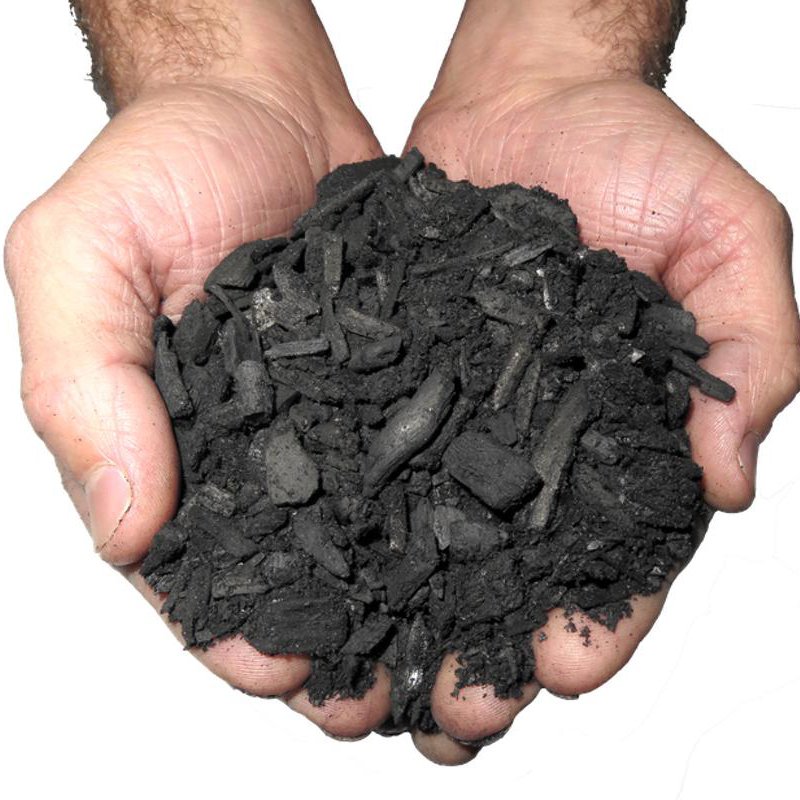
Biochar is a valuable resource that offers numerous benefits for soil health, water and nutrient management, habitat for microorganisms, influence on cation and anion exchange capacity, plant growth, and mitigation of climate change.
Unsieved
CHF 460. / M3
CHF 30.- / 30 L Sack
Available on pre-order.
(Sieved biochar available upon request)
Biochar or plant charcoal is a type of charcoal that is produced through pyrolysis (heating in the absence of oxygen to temperatures between 400-700°C) of organic materials such as wood. It is a stable form of carbon that is resistant to decomposition and can remain in the soil for hundreds or even thousands of years.
Overall, biochar is a valuable resource that offers numerous benefits for animal and soil health, water and nutrient management, habitat for microorganisms, influence on cation and anion exchange capacity, plant growth, and mitigation of climate change through carbon sequestration. Its wide range of applications makes it a versatile and sustainable solution for improving agricultural productivity, restoring degraded lands, and promoting environmental resilience.
Plant charcoal is used in a variety of areas and applications where its unique properties can improve soil health, promote ecological sustainability, and offer economic benefits.
Here are some areas where plant charcoal is used:
Plant charcoal is used in garden and landscaping projects to improve soil quality, promote plant growth, and enhance the health and beauty of ornamental plants. It can be incorporated into potting soil mixes, used as a soil amendment, or applied as a top dressing to provide essential nutrients and improve soil structure.
Assuming there is a flow of energy currents in the soil, the combination of biochar and Basalt, optimizes these currents, which in turn promotes microwave activity.
Biochar is commonly used in agriculture as a soil amendment to enhance soil fertility, structure, and water retention. It is applied in pastures and croplands, orchards, vineyards, and vegetable gardens to increase crop yields, reduce the need for chemical fertilizers and pesticides, and promote sustainable agricultural practices.
Biochar can be used as bedding material for livestock such as poultry, pigs, and cattle. Its absorbent properties help keep the animals' bedding dry, clean, and comfortable while reducing odors and ammonia emissions. Clean and dry bedding promotes the health and well-being of the animals by reducing the risk of respiratory diseases, foot problems, and skin infections.
Biochar can be added to animal manure to improve composting rotting efficiency, as well as reduce nutrient losses and odors. Mixing biochar with manure helps absorb excess moisture, improve aeration, and promote microbial activity, resulting in faster decomposition and nutrient-rich compost . Compost enriched with plant charcoal can be used as soil amendment to enhance soil fertility and support healthy plant growth.
Biochar can be added as a feed supplement to livestock feed to improve digestive health, nutrient absorption, and feed efficiency. Studies have shown that incorporating plant charcoal into animal feed can help reduce digestive disorders, improve feed conversion ratios, and enhance overall animal performance. Plant charcoal acts as a prebiotic, promoting the growth of beneficial gut bacteria and reducing the risk of colonization by pathogens.
Biochar can be used in animal farming operations to reduce ammonia emissions and improve air quality. By absorbing ammonia and other odorous compounds, Biochar helps create a healthier and more pleasant environment for animals and workers. This can lead to fewer respiratory problems, reduced stress, and improved productivity in animal husbandry.
Biochar can be used in animal farming operations to reduce ammonia emissions and improve air quality. By absorbing ammonia and other odorous compounds, plant charcoal helps create a healthier and more pleasant environment for animals and workers. This can lead to fewer respiratory problems, reduced stress, and improved productivity in animal husbandry.
Biochar has antimicrobial properties that can help reduce the survival and spread of pathogens in livestock farms. By inhibiting the growth of bacteria, viruses, and parasites, biochar can contribute to preventing disease outbreaks and enhancing the health and well-being of animals. This can lead to reduced reliance on antibiotics and other medications in animal production, promoting sustainable and responsible animal husbandry practices.
As an important component of our Alparama Terra-Preta nutrient humus, we use plant charcoal made from local wood chips. You can find more information here. here
It is commonly used as a soil amendment to enhance soil fertility, structure, and water retention. When added to the soil, biochar acts as a porous sponge, providing habitat for beneficial microorganisms, improving nutrient retention, and enhancing soil aeration and drainage.
One of the main advantages of biochar is its ability to sequester carbon in the soil, thereby contributing to climate change mitigation. By storing carbon in a stable form over long periods, biochar helps remove atmospheric carbon dioxide and reduce greenhouse gas emissions.
It helps to improve the nutrient cycle in the soil by increasing the availability of essential nutrients such as nitrogen, phosphorus, and potassium. It also helps to reduce nutrient leaching and runoff, thus preventing pollution of waterways and groundwater.
Biochar improves water retention in the soil and increases water absorption by enhancing soil structure and increasing pore space. This helps save water during dry periods, reduces the need for irrigation, and minimizes soil erosion and nutrient loss.
It has a neutral to slightly alkaline pH value, which helps buffer the pH of the soil and reduce acidity in acidic soils. This can improve nutrient availability, promote microbial activity, and enhance plant growth in soils with low pH.
It has the ability to adsorb and immobilize pollutants in the soil, including heavy metals, pesticides, and organic contaminants. This makes it suitable for remediation of contaminated soils and reducing the risk of environmental pollution.